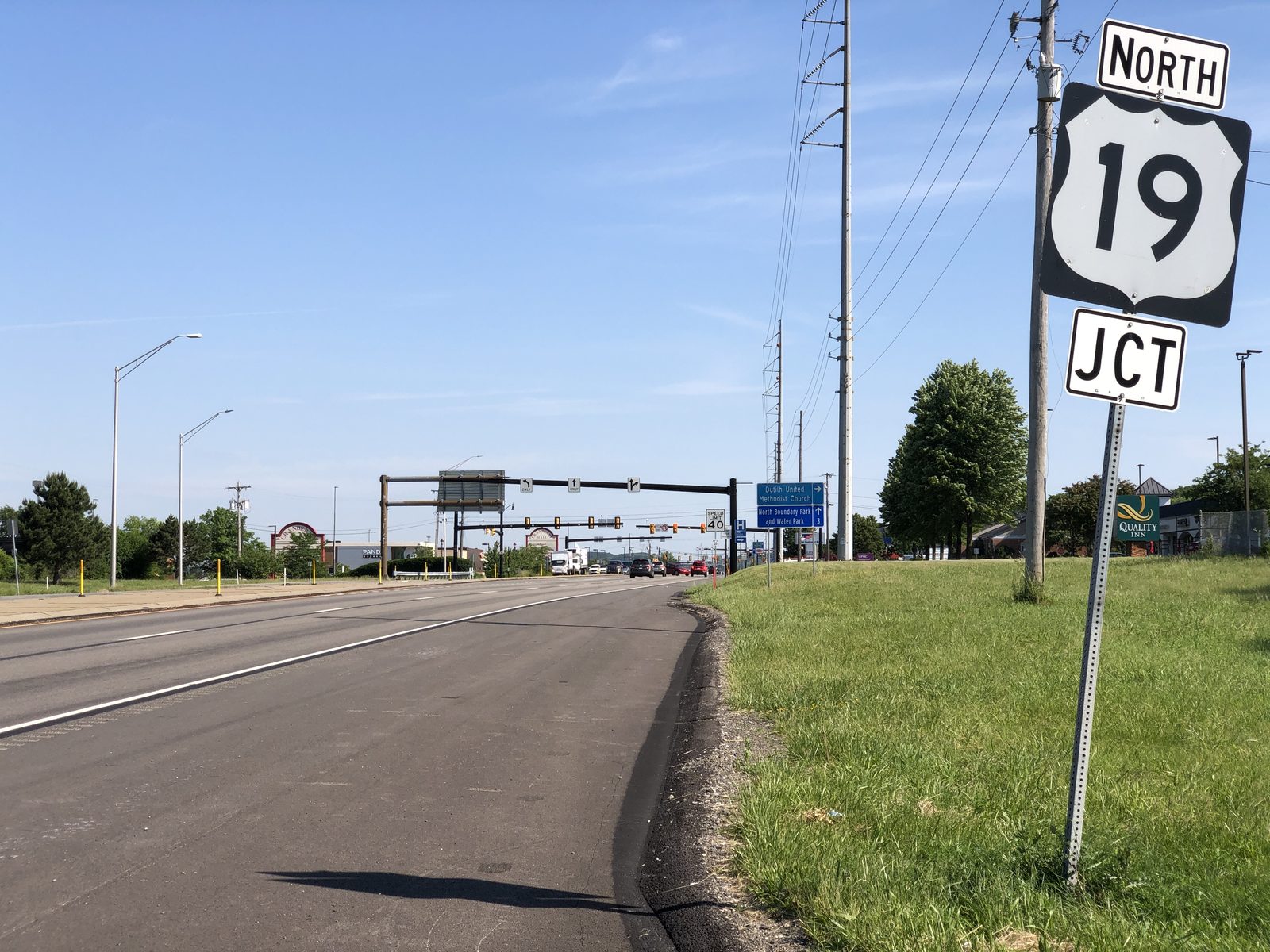
The views expressed in this editorial are those of the cranberrytownship.news editorial staff and do not represent the official position of Cranberry Township or its Board of Supervisors.
# The Vanishing Public: Why Nobody Shows Up to Cranberry's Board Meetings
On January 22, 2026, the Cranberry Township Board of Supervisors approved revised plans for the Meeder development — a 672-unit residential project spanning 57.3 acres between Rochester Road, Unionville Road, Ogle View Road, and Route 19 1. The vote was 4-0. There was no public comment.
Not a single resident of Cranberry Township spoke.
The motion to close public comment passed immediately, a procedural formality with nothing to close 1. Then the Board moved on to its next item.
This was not an anomaly. It was the norm.
The Pattern
We reviewed five Board of Supervisors meetings from January through April 2026 — the Agenda Preparation Meeting on January 22, the Regular Meeting on February 5, the combined Agenda Preparation Meeting on February 26, the Agenda Preparation Meeting on March 26, and the Regular Meeting on April 2. What we found was a consistent pattern of civic silence.
January 22: "There was no public comment for this meeting" 1. The Board approved the Meeder development (672 units), a Wakefield Estates subdivision (8 lots on 20.5 acres), and multiple contract authorizations. Every vote: 4-0, unanimous.
February 5: One person spoke during public comment — Brendan Linton, a resident of Connoquenessing Township, not Cranberry 2. He raised concerns about pedestrian and bicycle safety. The Board then approved the Wakefield Estates preliminary and final plans, Park Place Amendment No. 77 (7 additional units), a $112,000 signal replacement project, multiple purchase awards totaling hundreds of thousands of dollars, and a dozen other items. Every vote: 4-0, unanimous.
February 26: Again, Brendon Linton — from Connoquenessing Township — was the sole commenter during public comment, requesting that the Board not approve the Southwest Butler Multi-Municipal Comprehensive Safety Action Plan 3. No Cranberry residents spoke during general public comment. The Board approved the Henry Farm Tentative Planned Residential Development (114 single-family lots on 85.7 acres), the North Catholic High School subdivision, multiple authorizations to bid, and numerous other items. Every vote: 5-0, unanimous.
March 26 and April 2: The agendas for these meetings continued the pattern — public comment listed as a standing item, motions queued for action 45. The April 2 meeting alone included over $2.2 million in contract awards: $1,155,277.90 for street resurfacing, $1,057,629.65 for chip seal work, $201,738.90 for a fitness court, $125,625.00 for pavement rejuvenator, and $127,594.20 in partial payment for the Solids Handling Upgrade 5. The recorded votes from the April 2 agenda system show 5-0 on every item 5.
Across these five meetings, we could not find a single "No" vote from any supervisor on any substantive motion.
The Exception That Proves the Rule
There was one moment when the public did show up: the Henry Farm public hearing on February 26. When 114 homes were proposed along Rochester Road, Powell Road, and Darlington Road — directly affecting existing neighborhoods — a stenographer was sworn in to record testimony 3. Laura Dengel, a Sewickley Township resident, argued the public notice was inadequate. Deborah Cooper, of 218 Jefferson Lane, spoke about the development's impact on her neighborhood 3.
Two people. For a development that will reshape a corridor of the Township.
The contrast is instructive. When residents believe a decision will directly affect their property or their street, they appear. But for the routine business of governance — the millions spent on infrastructure, the subdivision approvals that incrementally reshape the community, the policy decisions that set the Township's direction — the seats are empty.
A National Problem, Locally Magnified
Cranberry Township is not unique in facing low meeting attendance. According to a 2024 Civic Health Index from the Carsey School of Public Policy, just 12 percent of surveyed residents attended a public meeting in the past year, down from 18 percent in 2019 6. Nationally, only about 19 percent of Americans contact their local elected officials over a 12-month period 7. Research consistently shows that meeting attendees are disproportionately white, older, wealthy, homeowners, highly educated, and longtime residents 7.
Robert Putnam's landmark study "Bowling Alone" documented the broader decline of American civic participation, attributing it partly to suburbanization, commuting, and the expansion of electronic entertainment 8. The irony is sharp: Cranberry Township — a suburban community where the average resident commutes to work, where households are busy and schedules tight — is precisely the type of place Putnam predicted would struggle with civic engagement.
The Pennsylvania Municipal League noted in 2025 that traditional civic organizations like Lions Club, Kiwanis, and Rotary have faced declining membership, particularly among younger generations who prefer "more flexible and digitally driven forms of engagement" 9. But digital engagement has not replaced the public meeting. It has simply left a void.
Is This Good Governance or Democratic Failure?
We want to be careful here. Unanimous votes and empty public comment periods are not, by themselves, evidence of dysfunction. It is possible — even likely — that Cranberry's Board of Supervisors is making sound decisions. The Township is well-managed by most metrics: strong bond ratings, growing tax base, professional staff, and a population that continues to choose to live here. When every vote is 5-0, it may reflect genuine consensus among thoughtful elected officials who have done their homework.
But democracy is not simply about outcomes. It is about process. It is about the legitimacy that comes from public deliberation, from knowing that decisions were made in the open, with the opportunity for challenge and dissent.
Consider what was approved without a single resident comment at the January 22 meeting: 672 new homes. That is not a minor adjustment. The Meeder development will add thousands of new residents, generate traffic, strain schools, and require services. It will reshape the character of the Rochester Road/Route 19 corridor. And it passed in silence 1.
Structural Barriers
Some of this silence may be structural. Cranberry's Board meetings are held on Thursday evenings at 6:30 PM 10. For a township of approximately 35,500 residents — growing at 1.33 percent annually 11 — that is a single window of opportunity for civic participation. Working parents managing dinner, homework, and bedtime routines face a real barrier. The meeting format itself — a formal agenda that can run dozens of items, with specialized language about subdivisions, TLD dates, and resolution numbers — can be intimidating to newcomers.
The Township does make agendas available online through its Provox IIP platform, as required by the Pennsylvania Sunshine Act 12. But accessing meeting materials requires navigating a system that, while functional, is not designed to draw casual public interest.
We should also note: the Board of Supervisors meets twice monthly — an Agenda Preparation Meeting and a Regular Meeting. The preparation meeting is where items are discussed; the regular meeting is where formal votes typically occur. This split structure may confuse residents about when their input is most useful.
Questions Worth Asking
This editorial does not have all the answers. But we believe these questions deserve honest consideration:
1. Should the Township experiment with meeting times — perhaps a Saturday morning session quarterly — to reach residents who cannot attend Thursday evenings?
2. Would a public comment period later in the meeting — after agenda items are presented but before votes — generate more participation than the current format, which places public comment at the start before most residents understand what is being decided?
3. Are there digital engagement tools — beyond posting agendas online — that could bridge the gap? Some municipalities have implemented online comment portals tied to specific agenda items.
4. Does the Board itself view the silence as a concern? We would welcome their perspective.
5. And perhaps most fundamentally: In a township of 35,500 people, where not a single resident commented on a 672-unit development, have we accepted civic disengagement as the default?
A Final Note
We want to acknowledge what the Board of Supervisors does well. Meetings are publicly noticed. Agendas are posted in advance. Minutes are recorded with vote tallies. The Sunshine Act is followed. The Township's professional staff provides thorough presentations and background materials. None of this is trivial — many municipalities fail at basic transparency.
But transparency is not the same as participation. You can open every door and still find no one walking through.
The vanishing public is not a Cranberry problem alone. It is an American problem. But in a community that is growing rapidly, approving major developments, and spending millions on infrastructure, the absence of public voices is worth noting — and worth asking whether anything can be done to change it.
The next Board of Supervisors meeting is open to the public. It always has been.
The question is whether anyone will come.
Sources
1 Cranberry Township Board of Supervisors, Agenda Preparation Meeting Minutes, January 22, 2026. Public Comment section: "There was no public comment for this meeting." PR #LD-25-19 (Meeder Revised Preliminary, 672 units) and PR #LD-25-20 (Meeder Revised Final Phase 1, 196 units) both approved 4-0.
2 Cranberry Township Board of Supervisors, Regular Meeting Minutes, February 5, 2026. Public Comment: "Brendan Linton, a resident of Connoquenessing Township, addressed the Board regarding concerns related to pedestrian and bicycle safety." All motions passed 4-0.
3 Cranberry Township Board of Supervisors, Agenda Preparation Meeting Minutes, February 26, 2026. Public Comment: Brendon Linton (Connoquenessing Township) opposed the Safety Action Plan. Henry Farm Public Hearing: Laura Dengel (Sewickley Township) and Deborah Cooper (218 Jefferson Lane) testified. All motions passed 5-0.
4 Cranberry Township Board of Supervisors, Agenda Preparation Meeting Agenda, March 26, 2026. Public comment and 30+ agenda items listed.
5 Cranberry Township Board of Supervisors, Regular Meeting Agenda, April 2, 2026. Contract awards totaling over $2.2 million. Provox IIP vote records show 5-0 on recorded items.
6 Carsey School of Public Policy, University of New Hampshire, 2024 Civic Health Index. Public meeting attendance: 12% of residents in past year, down from 18% in 2019. https://www.collaborativenh.org/civic-health-index-stories/2024/11/6/why-do-fewer-people-attend-local-meetings-and-what-can-be-done-about-it
7 Governing Magazine, "The Citizens Most Vocal in Local Government." National survey: 19% contacted elected officials; ~25% attended public meeting. Attendees disproportionately white, older, wealthy, longtime residents. https://www.governing.com/archive/gov-national-survey-shows-citizens-most-vocal-active-in-local-government.html
8 Robert D. Putnam, "Bowling Alone: The Collapse and Revival of American Community" (Simon & Schuster, 2000). Documented decline in civic participation including attendance at public meetings, attributing causes to suburbanization (10%), commuting (10%), electronic entertainment (25%), and generational change (50%).
9 Pennsylvania Municipal League, "From Town Halls to Tweets: The Evolution of Civic Engagement," April 22, 2025. https://www.pml.org/2025/04/22/from-town-halls-to-tweets-the-evolution-of-civic-engagement/
10 Cranberry Township Board of Supervisors meeting schedule: Thursday evenings at 6:30 PM, Cranberry Township Municipal Center. https://www.cranberrytownship.org/calendar.aspx?CID=23
11 World Population Review, "Cranberry township, Pennsylvania Population 2026." Estimated population 35,516; growth rate 1.33% annually; 8.32% increase since 2020 census. https://worldpopulationreview.com/us-cities/pennsylvania/cranberry-township-butler-county
12 Pennsylvania Sunshine Act, 65 Pa. C.S. Sections 701 et seq. Requires meeting agendas posted online 24 hours in advance (effective August 29, 2021). https://www.openrecords.pa.gov/SunshineAct.cfm
Community Discussion
0 commentsBe the first to comment on this story.